How Telematics Technology is Transforming Fleet Operations and Vehicle Management
In today's fast-paced transportation industry, businesses require more than just vehicle tracking. They need complete visibility into vehicle performance, driver behavior, fuel consumption, safety, and operational efficiency. This is where telematics technology plays a vital role.
Telematics combines telecommunications, GPS technology, onboard vehicle sensors, and cloud-based software to collect, transmit, and analyze vehicle data in real time. Whether managing a single vehicle or a large fleet, telematics devices help organizations make informed decisions, reduce costs, improve safety, and increase productivity.
What is a Vehicle Telematics Device?
A telematics device is an electronic unit installed in a vehicle that gathers data from GPS satellites, vehicle sensors, and communication networks. The collected information is transmitted to a centralized platform where fleet managers can monitor and analyze vehicle activities.
Modern telematics systems can provide information such as:
Real-time vehicle location
Vehicle speed and movement
Fuel consumption
Engine status
Driver behavior
Route history
Idle time
Vehicle maintenance alerts
Safety and security notifications
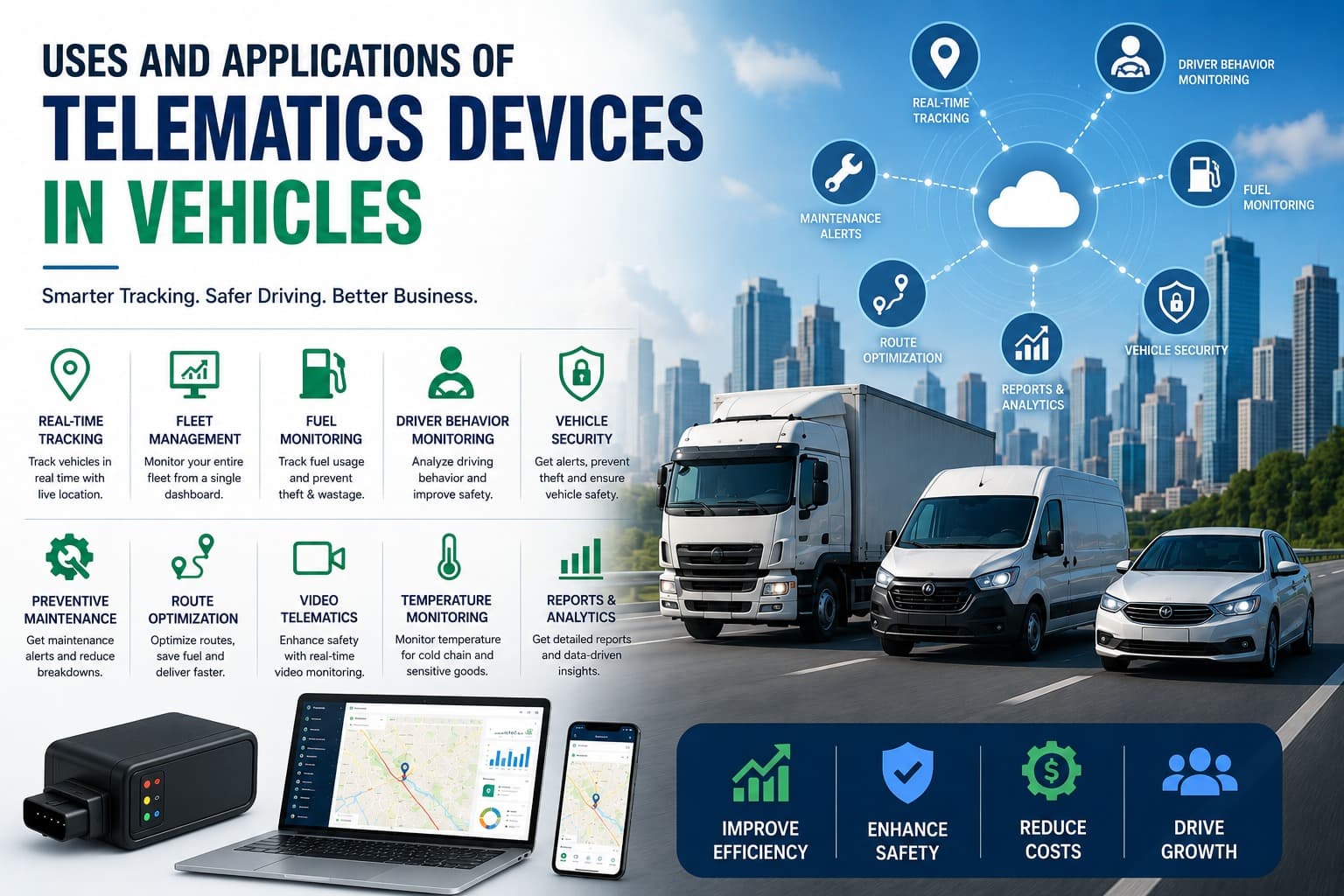
Key Uses and Applications of Telematics Devices
1. Real-Time Vehicle Tracking
One of the most common applications of telematics is real-time vehicle tracking. Fleet managers can monitor the exact location of vehicles on a live map and receive instant updates on their movement.
Benefits include:
Improved fleet visibility
Better dispatch management
Faster response to customer requests
Reduced unauthorized vehicle usage
Enhanced vehicle security
This feature is widely used by logistics companies, transport operators, public transportation services, and field service businesses.
2. Fleet Management and Operational Control
Telematics devices provide centralized monitoring of all fleet activities through a single dashboard. Fleet operators can track multiple vehicles simultaneously and gain valuable insights into daily operations.
Applications include:
Fleet utilization monitoring
Route performance analysis
Vehicle allocation planning
Driver productivity measurement
Operational reporting
This helps organizations improve efficiency while reducing operational costs.
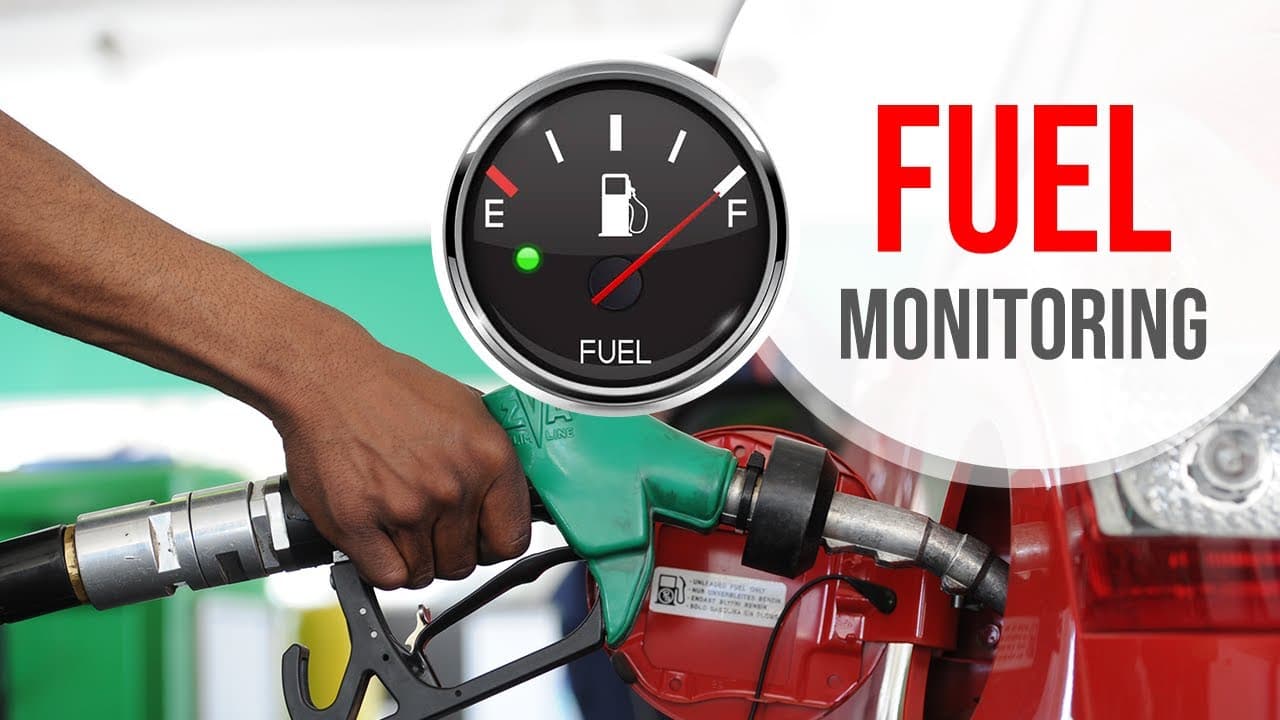
3. Fuel Monitoring and Fuel Theft Prevention
Fuel is one of the largest expenses for fleet operators. Telematics systems integrated with fuel sensors can provide accurate fuel consumption data and identify unusual fuel level changes.
Key advantages:
Detection of fuel theft
Monitoring of refueling activities
Fuel efficiency analysis
Reduced fuel wastage
Improved cost control
Businesses can significantly reduce fuel-related losses by using telematics-based fuel monitoring solutions.
4. Driver Behavior Monitoring
Unsafe driving habits can increase fuel costs, vehicle wear, and accident risks. Telematics devices help monitor driver performance through various parameters.
Monitored activities include:
Over-speeding
Harsh braking
Rapid acceleration
Excessive idling
Sharp cornering
Route deviations
Driver behavior reports help organizations improve road safety and encourage responsible driving practices.
5. Vehicle Safety and Security
Vehicle theft and unauthorized usage remain major concerns for vehicle owners and fleet operators. Telematics devices enhance vehicle security through advanced monitoring and alert systems.
Security applications include:
Geofencing alerts
Tamper alerts
Ignition monitoring
Remote engine immobilization
SOS emergency alerts
Theft recovery support
These features help vehicle owners maintain better control and protection of their assets.
6. Route Optimization
Efficient route planning is essential for reducing travel time and fuel consumption. Telematics systems analyze vehicle movement and route history to identify the most efficient routes.
Benefits include:
Reduced fuel costs
Faster deliveries
Improved customer service
Lower vehicle wear and tear
Increased daily trip capacity
This application is particularly valuable for logistics, distribution, and transportation companies.
7. Preventive Vehicle Maintenance
Unexpected vehicle breakdowns can lead to operational delays and expensive repairs. Telematics devices can monitor vehicle health and generate maintenance reminders based on usage and performance data.
Applications include:
Engine diagnostics
Scheduled maintenance alerts
Battery health monitoring
Service interval tracking
Fault code reporting
Preventive maintenance helps extend vehicle lifespan and reduce downtime.
8. Video Telematics and Driver Monitoring
Modern fleets are increasingly adopting video telematics solutions that combine cameras with telematics technology. These systems provide visual evidence and real-time monitoring of driving conditions.
Applications include:
Accident investigation
Driver distraction detection
Drowsiness monitoring
Forward collision warnings
Lane departure alerts
Safety compliance monitoring
Video telematics creates a safer driving environment while helping organizations reduce accident-related costs.
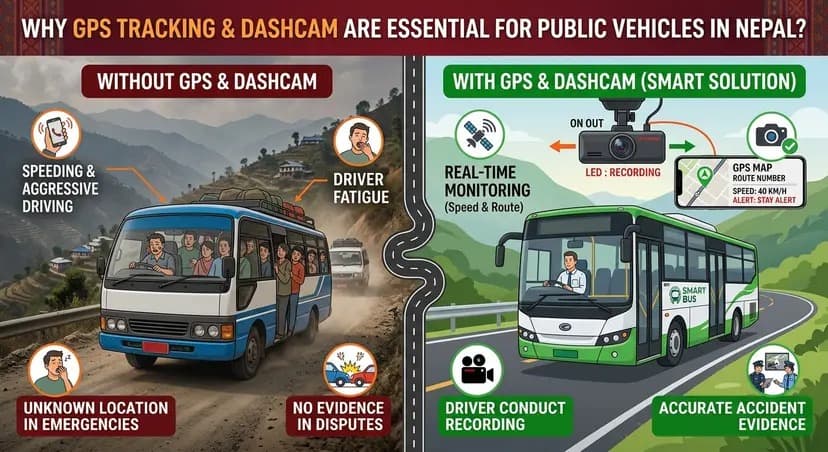
9. Public Transport Monitoring
Telematics devices are widely used in buses, school transportation, and passenger vehicles to improve operational transparency and passenger safety.
Common uses include:
Live vehicle tracking
Arrival time estimation
Route compliance monitoring
Passenger safety monitoring
Emergency response support
Public transportation operators can provide more reliable and efficient services through telematics technology.
10. Cold Chain and Temperature Monitoring
Businesses transporting temperature-sensitive goods such as pharmaceuticals, dairy products, and frozen foods can integrate temperature sensors with telematics devices.
Applications include:
Real-time temperature monitoring
Temperature threshold alerts
Compliance reporting
Product quality assurance
Cold chain visibility
This ensures goods remain within the required temperature range throughout transit.
11. Construction and Heavy Equipment Monitoring
Telematics solutions are increasingly used in construction and mining industries to monitor heavy machinery and equipment.
Benefits include:
Equipment utilization tracking
Working hour monitoring
Fuel consumption analysis
Maintenance scheduling
Asset security
This helps organizations maximize equipment productivity while reducing operational expenses.
12. Insurance and Risk Management
Insurance companies are increasingly using telematics data to assess driving behavior and determine risk profiles.
Benefits include:
Fair premium calculation
Safer driving incentives
Faster accident verification
Fraud reduction
Improved claims management
Telematics provides objective driving data that benefits both insurers and vehicle owners.
Industries Benefiting from Vehicle Telematics
Telematics solutions are valuable across various sectors, including:
Logistics and transportation
Public transportation
School transportation
Construction and mining
Oil and gas
Field service operations
Car rental companies
Government organizations
Emergency response services
Cold chain logistics
The Future of Vehicle Telematics
With advancements in Artificial Intelligence (AI), IoT sensors, video analytics, and cloud computing, telematics technology is becoming more intelligent and predictive. Future systems will provide deeper insights into driver behavior, vehicle health, operational efficiency, and road safety.
Organizations that adopt telematics today are positioning themselves for greater efficiency, improved safety, and long-term business growth.
Conclusion
Vehicle telematics has evolved far beyond simple GPS tracking. It is now a comprehensive technology that enables real-time monitoring, operational control, safety enhancement, fuel management, predictive maintenance, and data-driven decision-making.
Whether you manage a fleet of trucks, buses, taxis, construction equipment, or commercial vehicles, telematics devices provide the visibility and intelligence needed to improve performance, reduce costs, and maximize operational efficiency.
Investing in telematics is not just about tracking vehicles—it is about transforming the way transportation and fleet operations are managed.